


A Monument to First Nations Culture
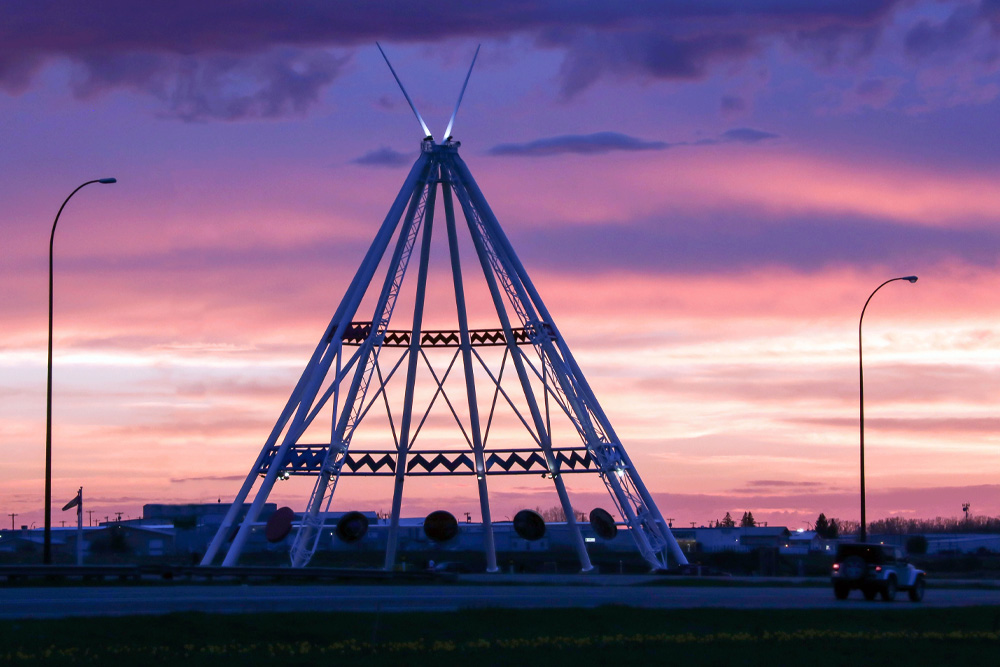
Towering over the landscape of southeastern Alberta, the Saamis Tepee in Medicine Hat is more than a striking roadside landmark. Standing at 215 feet, it is the world’s tallest tepee and a powerful symbol of Indigenous history, culture, and resilience.
For visitors and locals alike, the Saamis Tepee represents a place of reflection, learning, and respect for the First Nations peoples whose stories continue to shape the region.
From the 1988 Calgary Olympics to Medicine Hat
The Saamis Tepee was initially constructed for the 1988 Calgary Winter Olympics, where it served as an internationally recognized symbol of Indigenous culture. Following the Olympics, the structure was relocated in 1991 to its permanent home in Medicine Hat, overlooking the South Saskatchewan River.
The relocation was led by entrepreneur Amerigo “Rick” Nella Filanti, who recognized the tepee’s long-term cultural importance and worked to preserve it as a lasting landmark for the city.
An Engineering and Cultural Landmark
Beyond its symbolism, the Saamis Tepee is also an impressive feat of engineering.
Saamis Tepee Facts
Height: 215 feet (65.5 metres)
Diameter: 160 feet (48.8 metres)
Weight: Approximately 800 tons
Construction: Secured by 960 bolts
Symbolic Colours
White – Purity
Red – The sun
Blue – The South Saskatchewan River
Each colour reflects the deep connection between land, spirituality, and community.
Indigenous Narratives Through Art
Inside the Saamis Tepee, visitors can view ten hand-painted storyboards created by Indigenous artists. These artworks convey history, teachings, and cultural traditions passed down through generations.
Each storyboard serves as both an educational resource and a tribute to Indigenous identity, offering insight into the beliefs and experiences of First Nations peoples of the Plains.
The Storyboards Inside the Saamis Tepee
The Legend: How Medicine Hat Got its Name
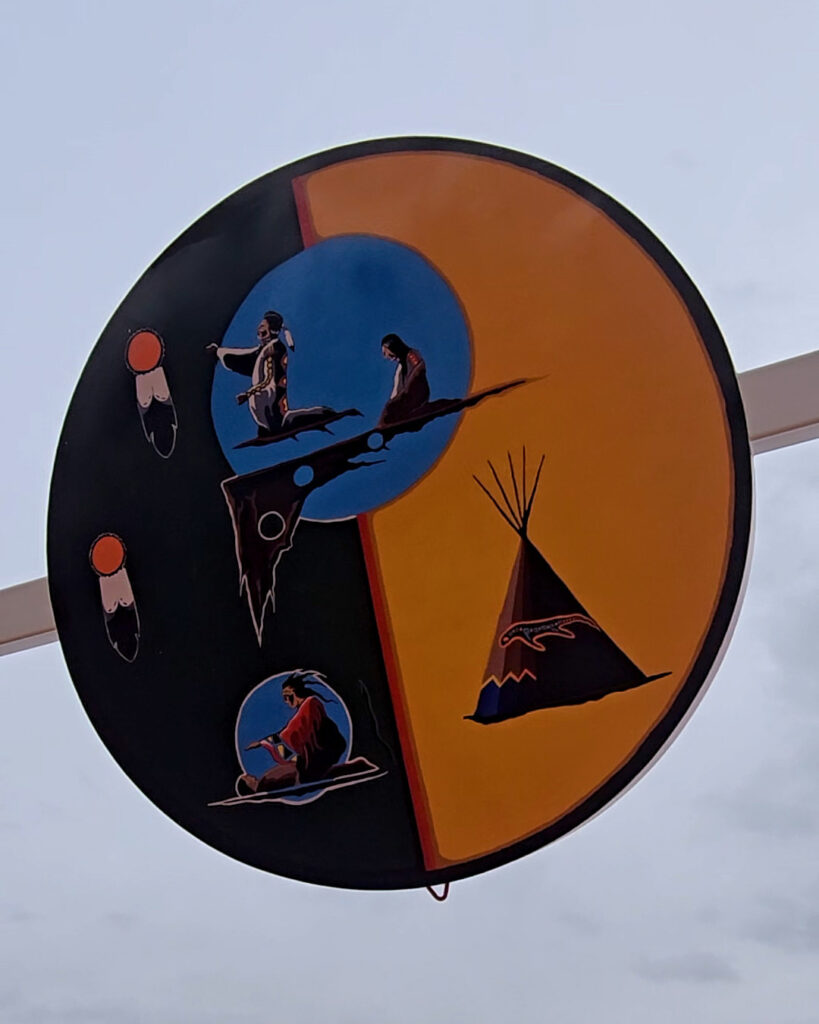
Illustrated by Joseph Hind Bull, this piece tells the story of Eagle Birth, a young man whose encounter with a medicine man by the river gave rise to the city’s name.
The Blackfoot Confederacy
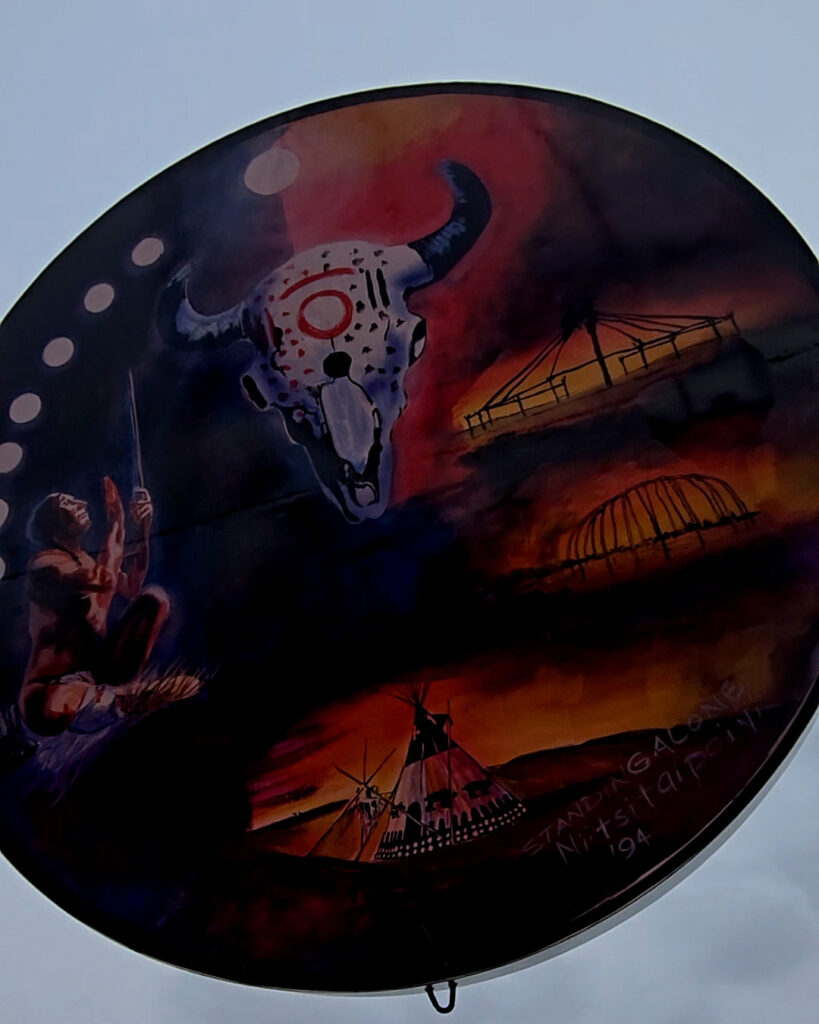
Created by Henry Standingalone, this artwork highlights the Blackfoot people’s spiritual connection to the sun, the buffalo, and traditional customs.
Plains Cree Way of Life
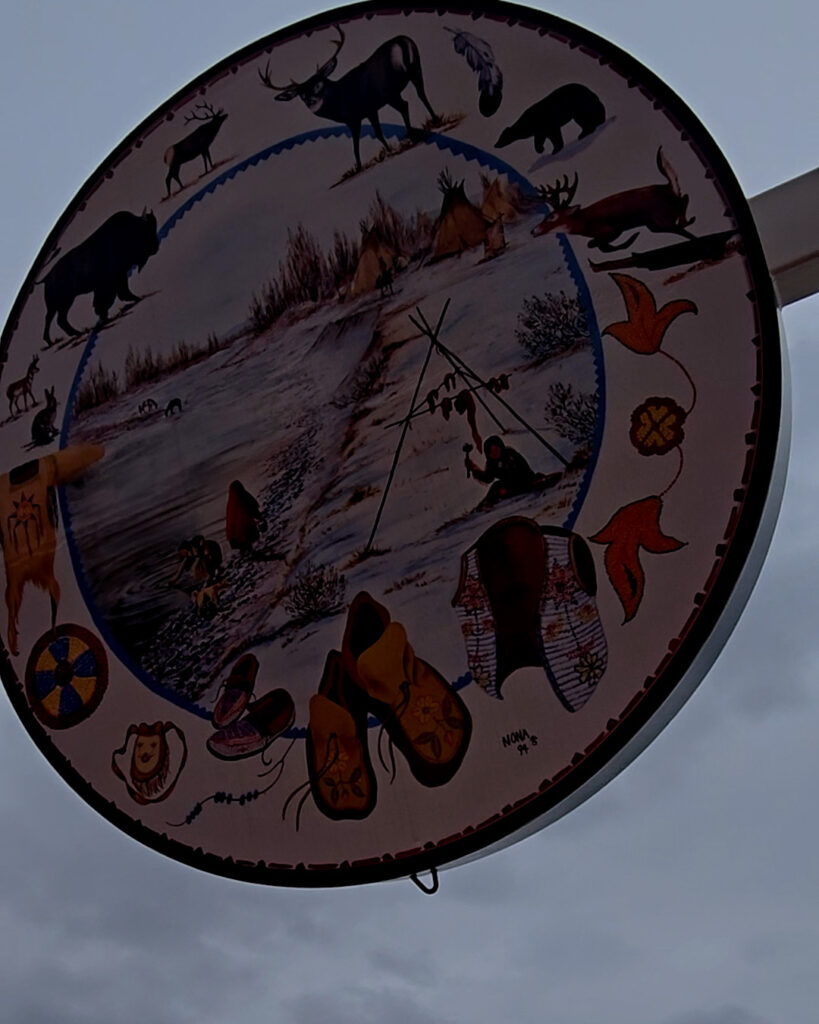
In this piece, Nona Foster illustrates a late-fall Plains Cree campsite, showing preparations for winter and traditional tools used for survival.
Circle of Unity — Multiculturalism
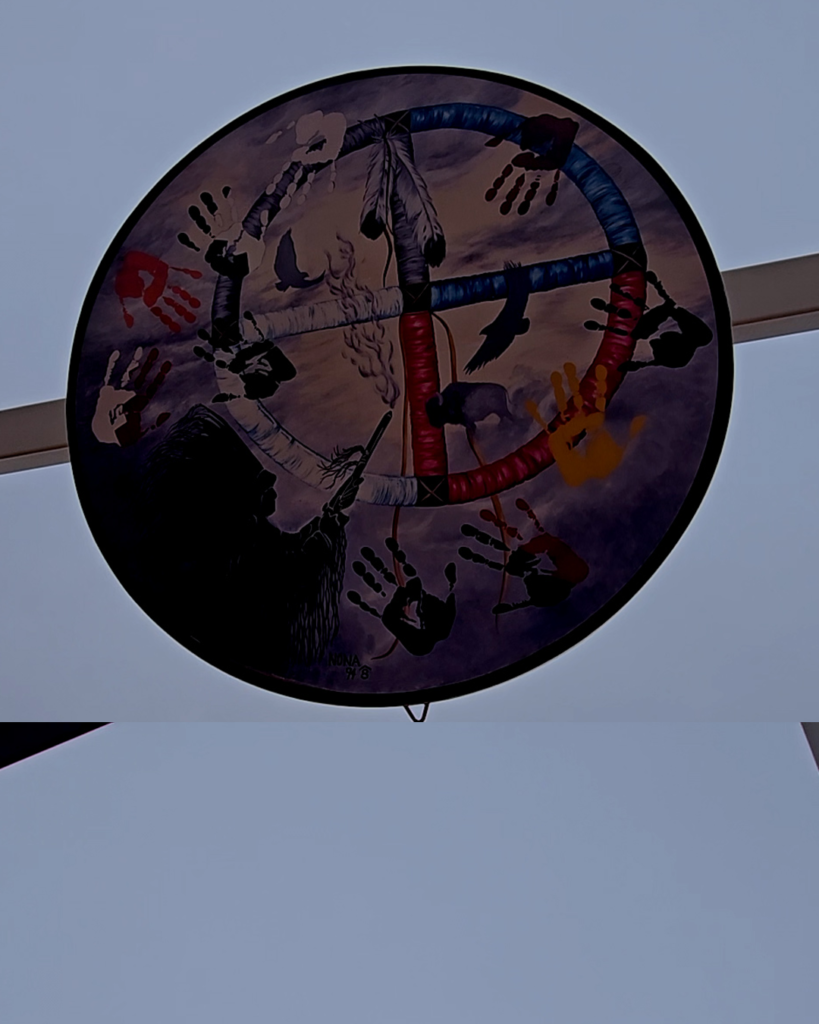
Also by Nona Foster, this artwork emphasizes harmony and inclusion, symbolized by a warrior holding a peace pipe while facing the sun.
Plains Cree Ceremonies
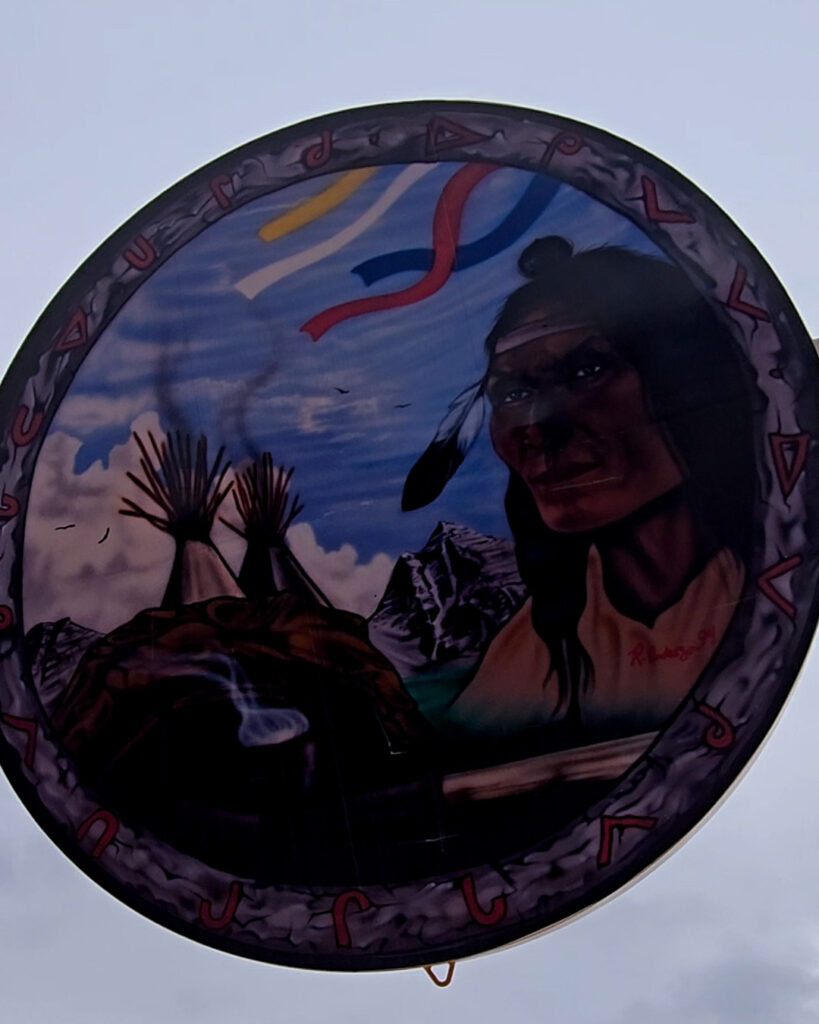
Painted by Robert Anderson, this storyboard depicts ceremonial traditions, including the significance of the four directions and sacred cultural symbols.
The Plains Indians
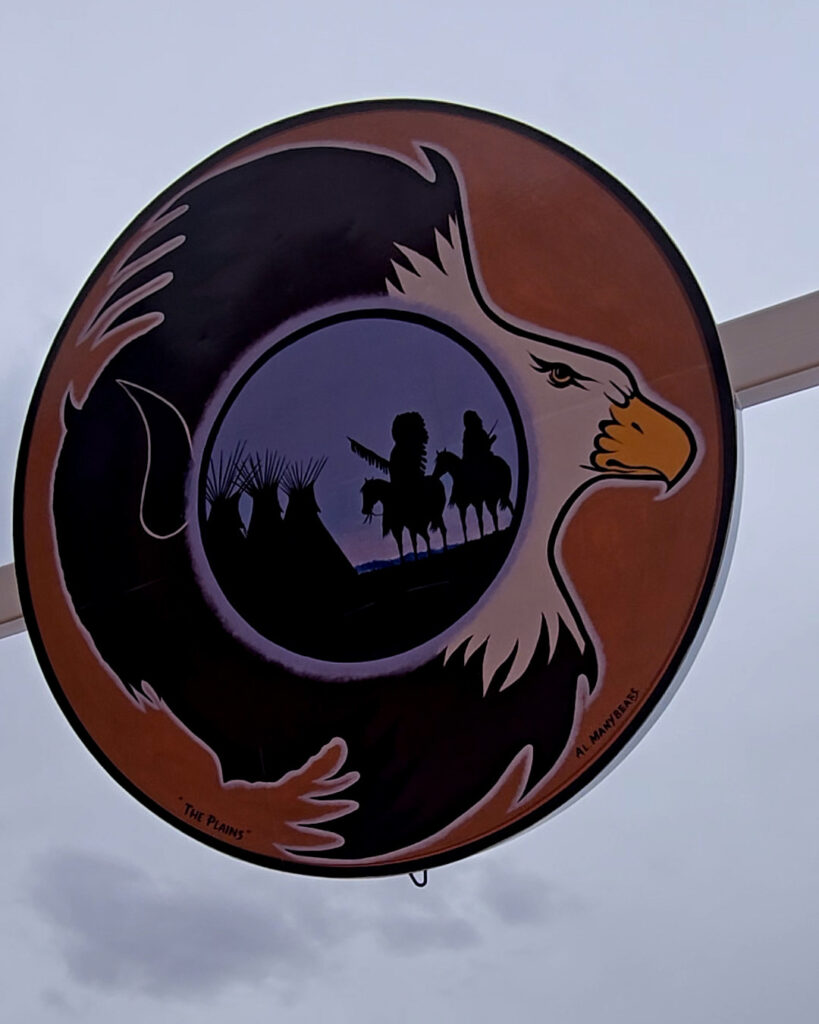
By Manybears, this artwork focuses on the relationship between people and nature, featuring the buffalo, eagle, tepee, and the cycle of life.
Arrival of the Europeans
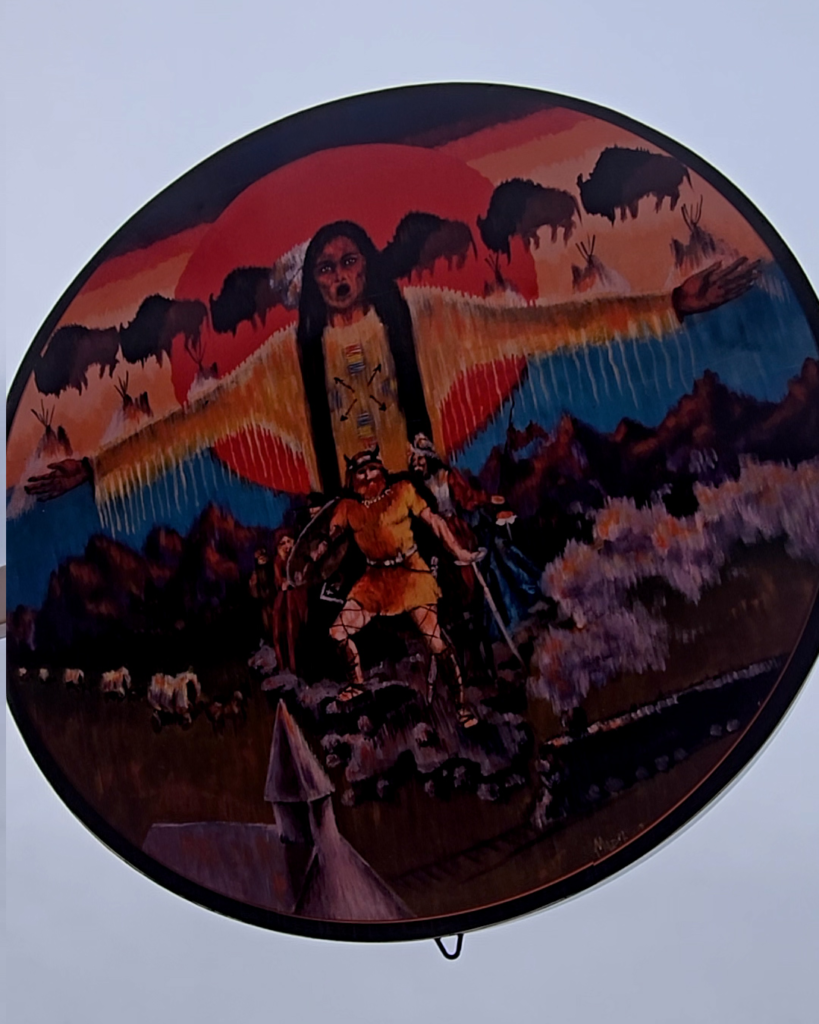
Created by Marilyn Fraser-King, this piece portrays the first encounters between Indigenous peoples and Europeans and the subsequent changes.
Treaty #7
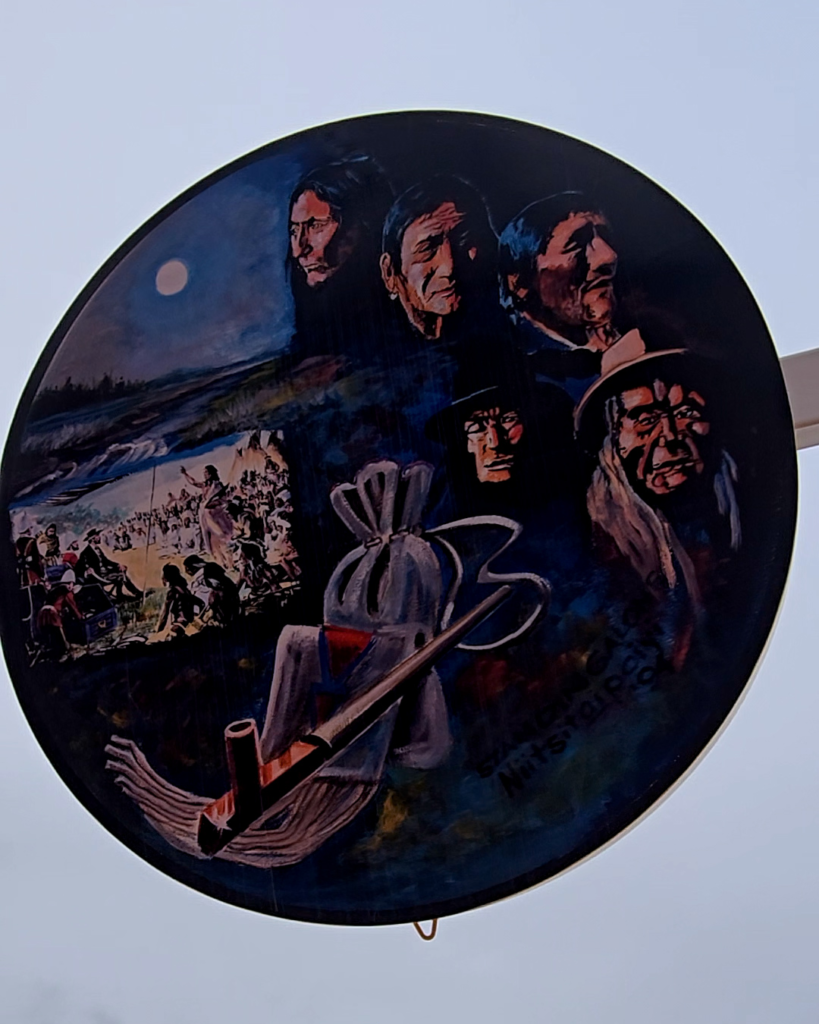
Painted by Henry Standingalone, this storyboard commemorates the signing of Treaty 7 in 1877, showing the five chiefs and the ceremonial sharing of the peace pipe.
The Metis of the Plains
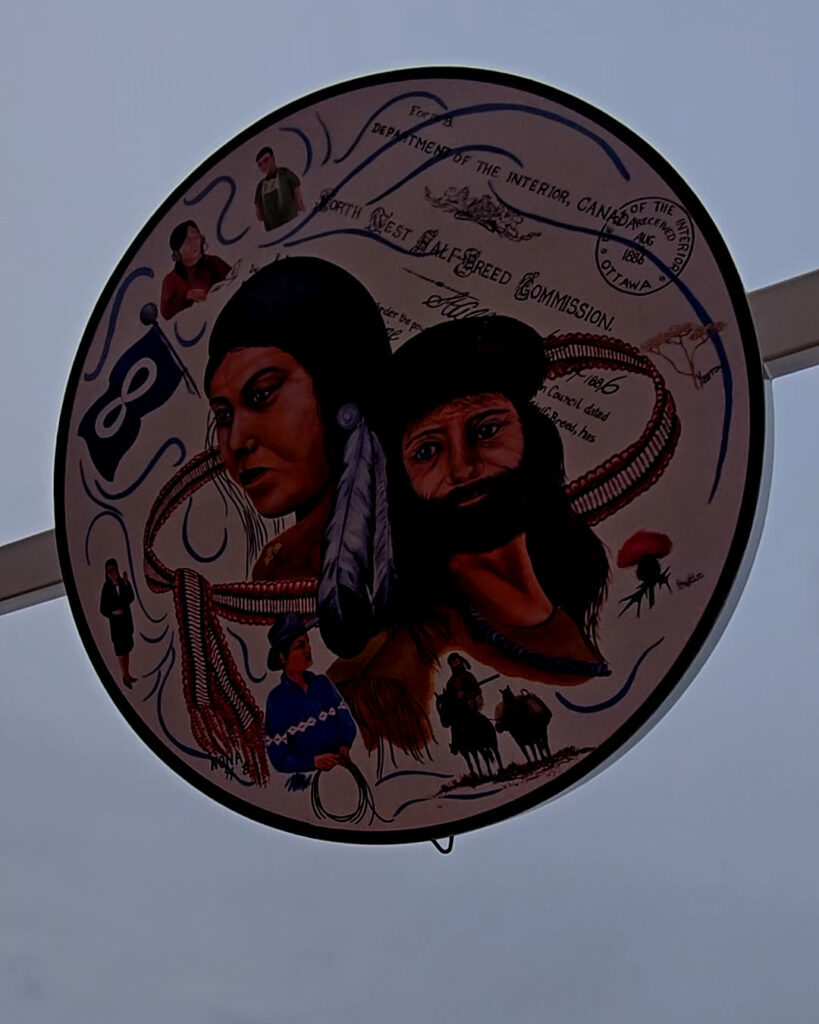
By Nona Foster, this artwork reflects the emergence of the Métis people, blending Indigenous and European heritage and symbolism.
First Peoples Today
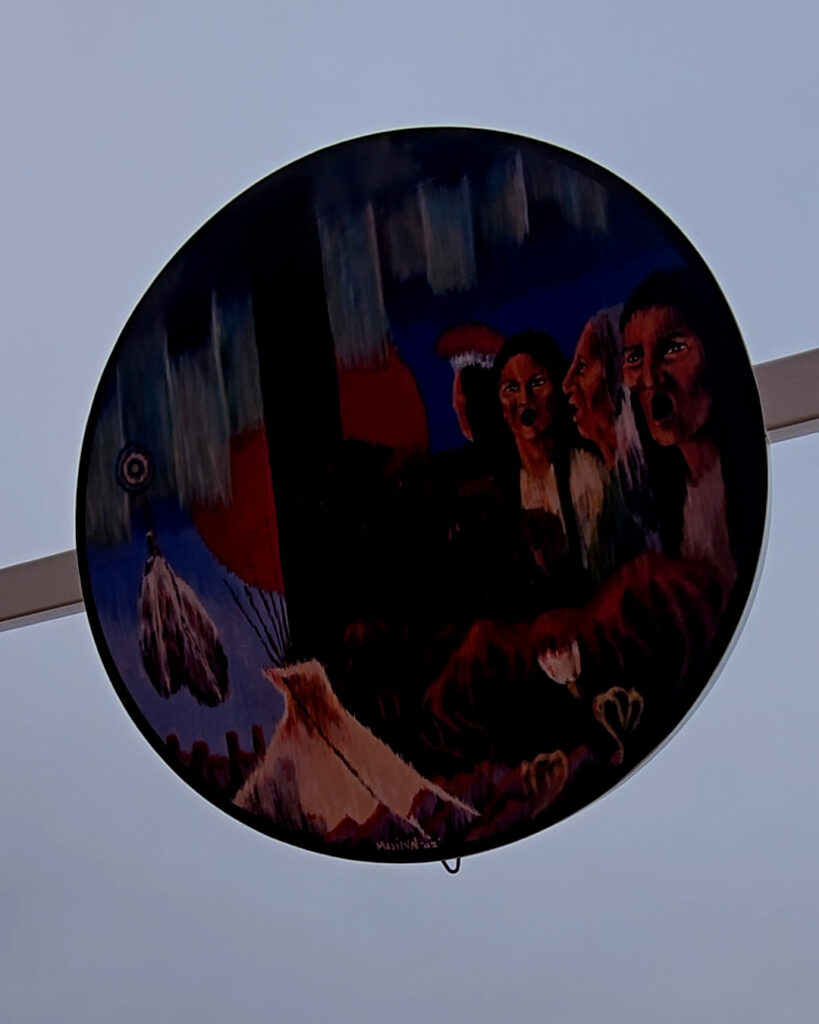
Also by Marilyn Fraser-King, this final piece highlights the continuation of Indigenous culture in modern times, showing the preservation of traditions alongside contemporary life.
Plan Your Visit to the Saamis Tepee
The Saamis Tepee is located along the Trans-Canada Highway in Medicine Hat, Alberta, near the Tourism Medicine Hat Visitor Centre. It is open year-round and regularly hosts First Nations events, education, and community gatherings.
Plans include developing an Indigenous cultural centre and enhancing interpretive experiences to deepen public understanding of the stories represented in the tepee.
Why the Saamis Tepee Matters to Medicine Hat
The Saamis Tepee stands as a reminder that Medicine Hat’s history did not begin with settlement, but with Indigenous peoples whose presence and culture continue to shape the region. It is both a landmark and a living symbol of heritage, respect, and shared responsibility.